Sponsored by Dryello. Read the disclosure. Last reviewed October 1, 2026.
Quick answer
Soccer referees work long outdoor matches in closed boots or turf shoes, often through wet grass, mud, or heat-soaked synthetic turf, with shared benches and locker rooms between games on a tournament weekend. That combination — hours of wet socks inside boots, then damp shared spaces — matches the conditions where athlete's foot fungus thrives (AAD, MedlinePlus, CDC). Start with clean, dry feet; use a foot antiperspirant on unbroken skin if sweat is the main issue; pack spare moisture-wicking socks and change when they are soaked; wear shower shoes in locker rooms; rotate boots so each pair dries fully; and air muddy gear out of the bag overnight. If you already have itching, peeling, or cracking between the toes, that needs an antifungal such as tolnaftate, not an antiperspirant. Our sponsored picks are Dryello Foot Antiperspirant For Him first, then Dryello's Athlete's Foot Treatment Stick.
Key takeaways
- Soccer officiating is an outdoor foot load: wet grass, mud, warm turf, and full-length matches keep feet closed and wet for 90-plus minutes, often through overtime.
- Athlete's foot is a fungal infection spread by contact, often on locker room and shower floors. Wet boots do not cause it alone, but they help it grow (AAD, MedlinePlus).
- An antiperspirant reduces sweat. Powders mostly absorb it. Deodorants only address odor (AAD).
- Change socks when they are wet — at halftime if needed, and between games on a tournament Saturday.
- Never put antiperspirant on cracked or broken skin. Treat suspected athlete's foot with an antifungal first.
- Dryello is featured first because it sponsors this article. We did not test any product.
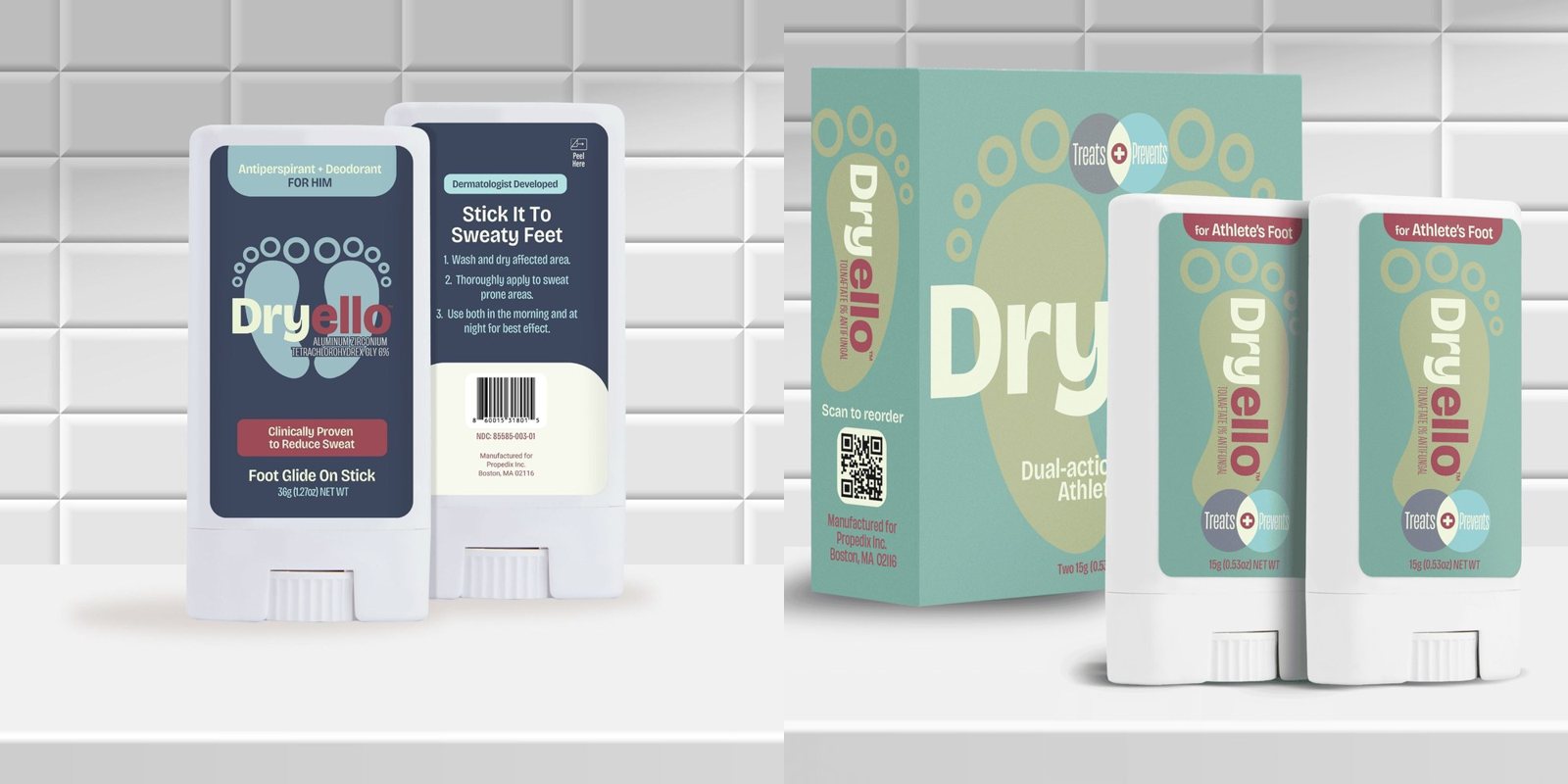
Why soccer referees are hard on their feet
Our general guide to referee foot care for tournament days covers multi-sport officials. Our basketball referee foot-care page covers indoor gym heat and polished floors. Our baseball and softball umpire page covers dusty diamonds and doubleheaders. Soccer has a narrower, outdoor-pitch pattern.
You are on your feet for a full match clock — two 45-minute halves plus stoppage, and sometimes extra time or kicks from the mark. Boots and turf shoes grip wet grass, mud, or synthetic turf that holds heat. Sideline tents stay damp after rain. A Saturday club or travel tournament can mean two or three assignments with short turnarounds and a shared bench between games. Then everyone piles into the same locker room or parking-lot shower setup.
That matters because of how athlete's foot works. It is a fungal skin infection. MedlinePlus describes the fungus as thriving in warm, moist areas and lists wearing closed shoes, keeping feet wet for long periods, and sweating a lot as risk factors. The American Academy of Dermatology (AAD) says most people pick up athlete's foot by walking barefoot in moist public places like locker rooms and pool decks, and that the fungus thrives inside hot, sweaty shoes. The CDC lists public showers and locker rooms without protective footwear among common ringworm risk factors. Soccer officials check every box: closed footwear for hours on wet surfaces, then shared damp spaces.
If you are a league director looking for coverage, see our page on soccer referees for hire on Long Island.
For coaches and athletic directors managing artificial turf complexes — where many club and high school matches are played — DreamFields USA also published a guide on athlete's foot and foot care on artificial turf sports fields.
Sweaty feet, wet boots, odor, or athlete's foot?
| What you notice | Most likely | What usually helps |
|---|---|---|
| Socks soaked by halftime from rain or dew, no rash | External wet plus foot sweating in closed boots | Foot antiperspirant on unbroken skin, moisture-wicking socks, change at half or between games |
| Feet sliding inside turf shoes late in a tournament slate | Sweat and field moisture reducing traction inside the shoe | Dry socks, antiperspirant, rotate to a dry pair if you own two |
| Strong smell from the officials bag after muddy matches, no rash | Bacteria breaking down sweat in closed, damp gear | Air out boots, rotate pairs, wash insoles, reduce sweat |
| Itching, burning, peeling, or cracked skin between the toes | Possibly athlete's foot | OTC antifungal such as tolnaftate, used as the label directs |
| Swelling, warmth, red streaks, pus, or fever | Possible bacterial infection | See a clinician promptly (MedlinePlus) |
A match-day and tournament-weekend foot routine for soccer referees
None of this is complicated. The trick is doing it every assignment day, not only when your feet already hurt.
Before you leave home
- Wash your feet with soap and dry them completely, especially between the toes (AAD).
- If sweat is your main problem and the skin is unbroken, apply a foot antiperspirant as the label directs.
- Put on moisture-wicking socks. The AAD suggests looking for the words "moisture wicking" on the label.
- Wear the boots or turf shoes that have had at least a full day to dry out after the last muddy or wet match.
In the officials bag
- At least one spare pair of socks for a halftime or between-game change, plus a bag for the dirty pair.
- Shower shoes or slides for locker rooms and any shared shower (AAD).
- A small towel just for your feet — useful after a rain-soaked first half.
- If you own two pairs (grass boots and turf shoes, or two turf pairs), bring the second pair for long tournament weekends so you can swap when the first pair is soaked.
- Your foot antiperspirant or antifungal stick. Solid sticks do not spill next to cards and a whistle.
Need a Soccer Official for Your Pitch?
EmergencyRefs connects Long Island leagues and tournament directors with soccer referees, including last-minute coverage.
Book a Referee →At halftime and between games
- If socks are soaked from rain, dew, or sweat, change into a dry pair before the second half or the next kickoff.
- Loosen or slip off boots briefly when the turnaround allows (AAD notes that letting shoes off helps prevent odor, irritation, and skin infections).
- Wipe feet dry before a fresh pair of socks goes on. Sideline moisture and wet grass tracked into the tent add water you did not sweat.
- Do not walk barefoot in the officials' locker room, shared tent, or shower. Slides go on first.
After the last whistle
- Take boots, turf shoes, and insoles out of the bag as soon as you get home. Knock mud off outdoors. Do not leave them zipped in a hot or damp car overnight.
- Wash and fully dry your feet. If you are treating athlete's foot, apply your antifungal now, as the label directs.
- Wash worn socks and your foot towel. The AAD advises not sharing towels or shoes with someone who has athlete's foot.
- On a two-day tournament weekend, hang the day's pair to dry overnight so Sunday's first assignment does not start in yesterday's wet boots.
The products we recommend first
These are sponsored recommendations. Dryello paid for this placement, and we are telling you so up front. What follows sticks to what each product's FDA-listed label and the maker's website say. We have not tested these products ourselves.
For sweaty and wet-sock feet first: Dryello Antiperspirant Deodorant Foot Glide-On Stick, For Him
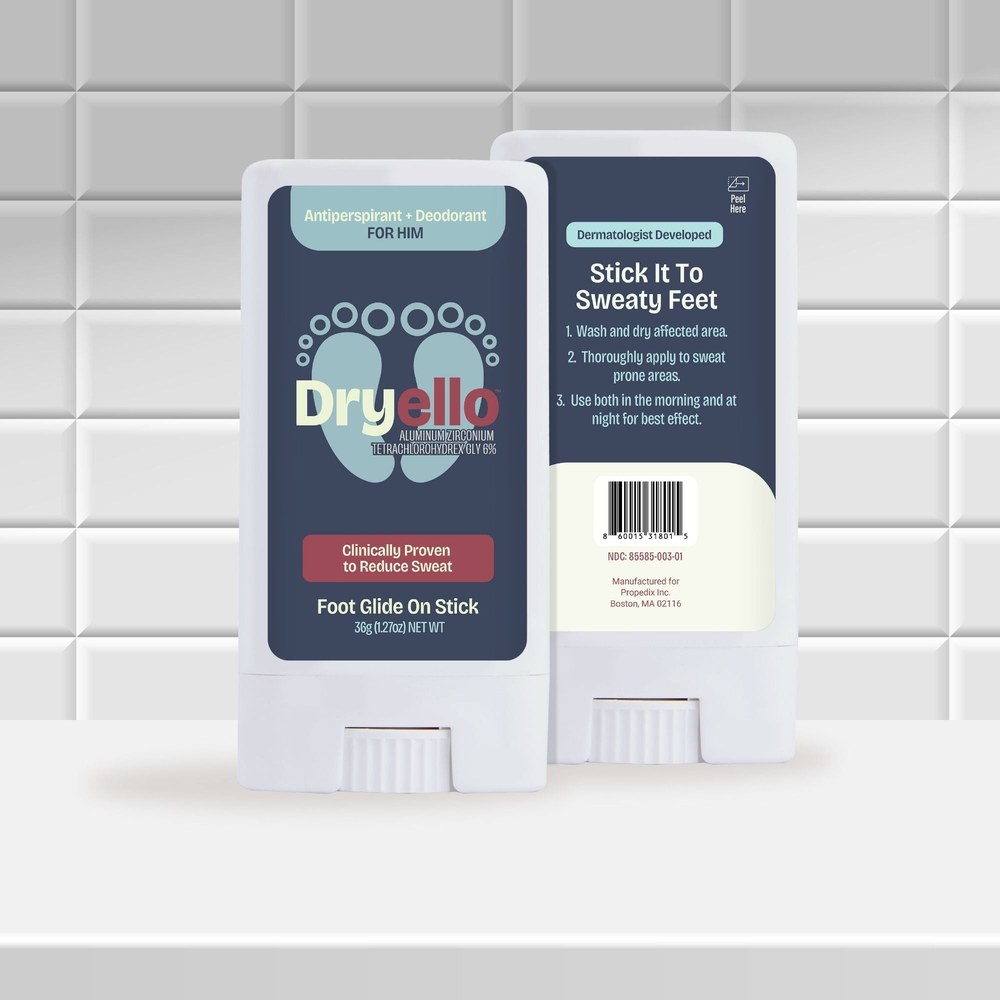
Dryello Foot Antiperspirant, For Him (sponsored)
- Drug Facts label on DailyMed: aluminum zirconium tetrachlorohydrex gly 6%, purpose antiperspirant, use "reduces sweat."
- Directions: wash and dry the area, then apply with numerous broad strokes, including in crevices.
- Solid glide-on stick made for feet. Dryello says it goes on dry, so socks go right on — useful in a parking lot before you lace boots for an 8 a.m. kickoff.
- Warnings: not for broken skin; stop if a rash or irritation occurs; ask a doctor first if you have kidney disease.
- Listed at $14.50 and in stock on dryello.com on September 25, 2026.
Best for: Soccer referees whose socks are soaked by the middle of a match or tournament slate and who want a true antiperspirant, not just an absorbent powder, in a format that will not leak next to a whistle.
See For Him at dryello.comThere is also a For Her version with the same active ingredient and label and, per Dryello, a lighter scent. It showed as sold out on dryello.com when we checked on September 25, 2026. Check For Her availability at dryello.com. Both versions are scented; inactive ingredients include orange peel oil, so they may not suit fragrance-sensitive skin.
For athlete's foot: Dryello Athlete's Foot Treatment Stick
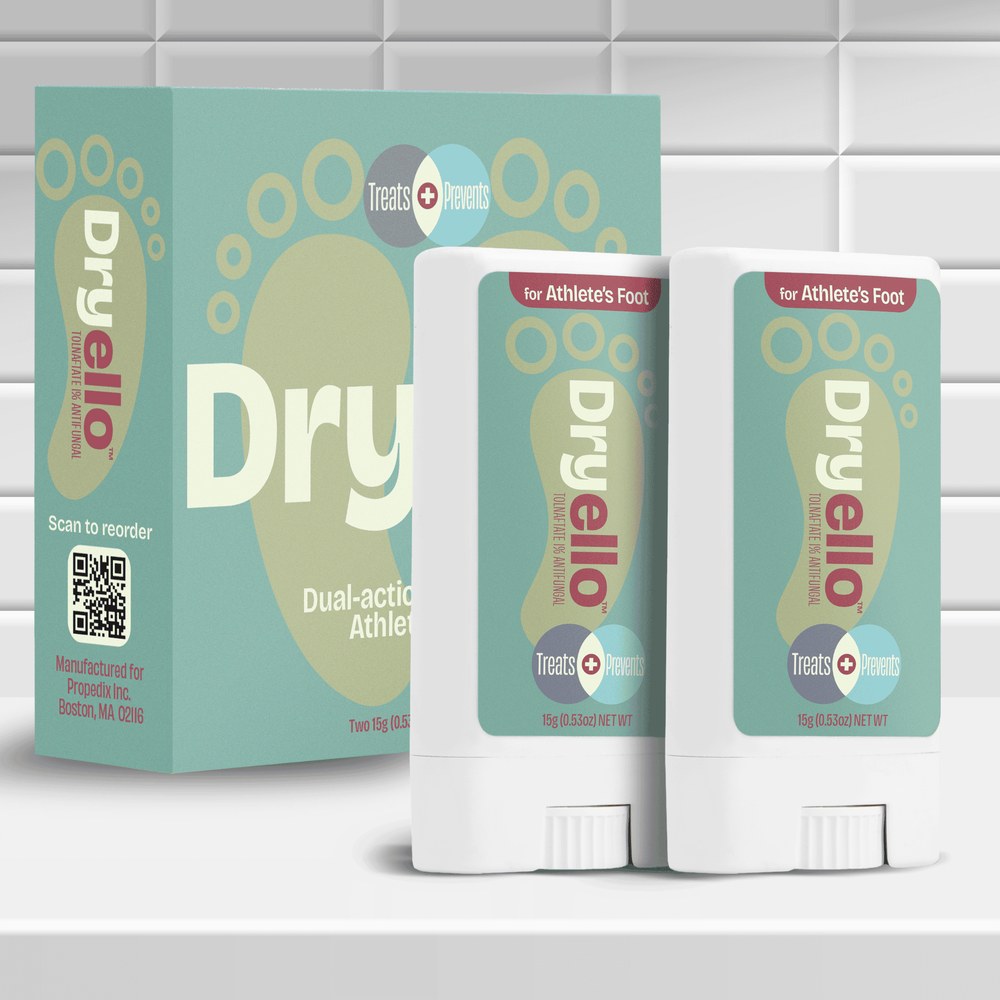
Dryello Athlete's Foot Treatment Stick (sponsored)
- Drug Facts label on DailyMed: tolnaftate 1%, antifungal.
- Label uses: cures most athlete's foot; relieves itching, burning, cracking, and scaling; prevents recurrence of most athlete's foot with daily use.
- Label directions: wash and dry feet thoroughly, apply a thin layer twice daily (morning and night), pay special attention to the spaces between the toes, and change shoes and socks at least once daily.
- Dry glide-on stick, so there is no cream on your fingers before you handle a whistle or card. Dryello's site recommends twice daily for 4 weeks, then daily use to help prevent recurrence.
- Listed at $16.95 for a pack of two 15 g sticks on dryello.com on September 25, 2026. Dryello lists it as HSA/FSA eligible.
Best for: Soccer referees who already have itching or peeling between the toes, or who keep getting athlete's foot back during outdoor season and tournament weekends.
See the stick at dryello.com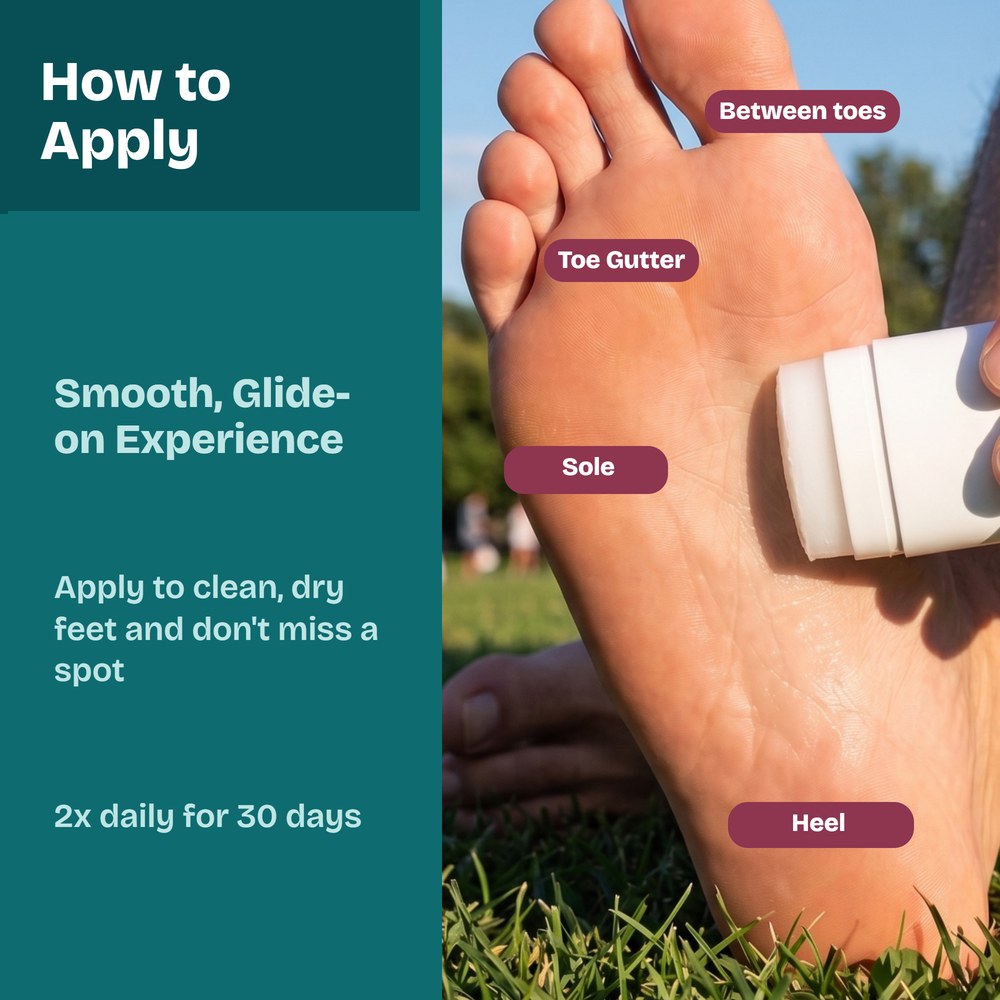
Pitch-specific factors: wet grass, mud, turf heat, and boot rotation
Grass boots and turf shoes are built for traction on outdoor surfaces. That grip comes with closed uppers that hold water from dew, rain, and irrigation. Warm synthetic turf radiates heat into the shoe even when the air feels mild. Neither problem is solved by a product alone. Rotation matters: if you own two pairs, alternate them so each gets a full day to dry (AAD). Pull insoles when you can. Hose or brush mud off outdoors, then air the pair open overnight — do not leave a soaked pair zipped in the bag between Saturday morning kickoffs and an evening slate.
Sidelines and locker rooms are the other half. Even when the pitch looks dry by the final whistle, shared benches, damp tents, and concrete locker rooms stay wet. Shared towels and bare feet on locker-room floors are how the fungus moves (CDC, AAD). Keep shower shoes in the bag the same way you keep a whistle — always there, not optional.
Tournament weekends amplify everything. Multiple matches, short turnarounds, and parking-lot gear bags mean socks and boots rarely get a full dry cycle unless you force one. Pack more socks than you think you need. Treat the overnight dry-out as part of the job, not optional recovery.
Can soccer referees treat athlete's foot during the season?
Yes. OTC antifungals are applied at home, morning and night, and you can keep working matches while you use them. What matters is sticking with the full course. MedlinePlus advises continuing treatment for 1 to 2 weeks after the infection has cleared to keep it from coming back, and seeing a provider if it is not better in 2 to 4 weeks. Dryello's tolnaftate label tells you to wear well-fitting, ventilated shoes and to change shoes and socks at least once daily. On a tournament day, that between-game sock change is part of treatment, not an extra chore.
Do sweaty feet and wet boots cause athlete's foot?
Sweat and wet grass do not cause the infection by themselves. You have to come into contact with the fungus, usually on a damp floor or through shared shoes and towels. Once it is there, a wet boot gives it an ideal place to grow. The AAD says to keep your feet dry even if you have not gone barefoot in public areas, because the fungus thrives inside hot, sweaty shoes. Reducing sweat is a reasonable part of prevention alongside shower shoes, daily washing, dry socks, and letting muddy boots dry fully between assignments.
Can I use a foot antiperspirant and an athlete's foot treatment at the same time?
Neither Dryello label addresses using the two together, so ask a pharmacist or your doctor if you want to combine them. The clear rule from the antiperspirant label is not to apply it to broken skin, and athlete's foot often causes cracking between the toes. A sensible approach is to treat the infection first, then add an antiperspirant to healthy, unbroken skin once the rash has cleared, if sweat and wet socks are still a problem on long outdoor days.
When should a soccer referee see a doctor?
See a clinician if symptoms are not better after 2 to 4 weeks of self-care or keep coming back (MedlinePlus), or if the rash spreads to your toenails or other parts of your body. Get prompt care for a foot that is swollen, warm, streaked red, draining, or painful, or if you have a fever. If you have diabetes, poor circulation, or numbness in your feet, talk to your clinician before treating any foot problem yourself. The NIDDK recommends checking your feet every day if you have diabetes.
Frequently asked questions
Why do soccer referees get sweaty feet and athlete's foot?
Soccer officials work long outdoor matches in closed boots or turf shoes, often through wet grass, mud, and warm synthetic turf, with little chance to air out their feet between games on a tournament weekend. MedlinePlus lists closed shoes, sweaty feet, and keeping feet wet for long periods as risk factors for athlete's foot. Shared benches, sideline tents, and locker rooms add the damp surfaces where the fungus spreads (AAD, CDC).
Should a soccer referee use a foot antiperspirant or an antifungal?
Use a foot antiperspirant for sweat and odor on clean, unbroken skin. Use an antifungal such as tolnaftate if you have itching, peeling, or cracking between the toes. Dryello's antiperspirant label says not to use it on broken skin. An antiperspirant does not treat a fungal infection.
Can I referee a soccer tournament weekend while treating athlete's foot?
Yes. Over-the-counter antifungals are applied at home and do not require time off your feet. Dryello's tolnaftate label says to wash and dry your feet, apply a thin layer twice daily (morning and night), and change shoes and socks at least once daily. See a doctor if it is not better in 2 to 4 weeks (MedlinePlus).
Do wet grass and mud cause athlete's foot for soccer referees?
Wet grass and mud do not cause athlete's foot by themselves. Athlete's foot is a fungal infection you pick up from contact with the fungus, often on damp locker-room or shower floors. What outdoor pitches do is keep socks and boots wet for 90-plus minutes, sometimes through overtime, which is the warm, moist environment where the fungus thrives once it is on the skin (AAD, MedlinePlus).
Should soccer referees prefer turf shoes or grass boots for foot health?
Choose the footwear the surface and competition rules require for traction and safety first. From a skin-care angle, what matters more is how wet the sock stays and whether the pair can dry fully between assignments. Rotate pairs when you can, pull insoles after muddy matches, and change into dry socks when socks are soaked (AAD).
Who should see a doctor instead of self-treating?
Anyone with diabetes, poor circulation, numbness in the feet, or a weakened immune system should talk to a clinician before treating foot problems themselves (NIDDK). Get prompt care for a foot that is swollen, warm, streaked red, draining pus, or accompanied by fever (MedlinePlus).
Sources
- DailyMed, U.S. National Library of Medicine. Dryello Antiperspirant Deodorant Foot Glide-On Stick drug label. Accessed October 1, 2026.
- DailyMed, U.S. National Library of Medicine. Dryello Athlete's Foot Treatment Stick (tolnaftate 1%) drug label. Accessed October 1, 2026.
- American Academy of Dermatology. How to prevent athlete's foot. Accessed October 1, 2026.
- American Academy of Dermatology. Hyperhidrosis: tips dermatologists give their patients. Accessed October 1, 2026.
- MedlinePlus, U.S. National Library of Medicine. Athlete's foot (Medical Encyclopedia). Accessed October 1, 2026.
- Centers for Disease Control and Prevention. Ringworm basics (includes athlete's foot). Accessed October 1, 2026.
- Centers for Disease Control and Prevention. Causes of ringworm. Accessed October 1, 2026.
- National Institute of Diabetes and Digestive and Kidney Diseases. Diabetes and foot problems. Accessed October 1, 2026.
Sponsorship disclosure
This article is sponsored by Dryello, a foot-care brand made by ProPedix, Inc. Dryello is a paying client of EmergencyRefs, and Dryello paid for this placement. That is why Dryello products are recommended first on this page. Links to dryello.com include tracking parameters so Dryello can see visits from this page.
We did not lab-test, wear-test, or clinically evaluate any product on this page, and we do not publish reviews or ratings we did not collect. Product details come from each product's FDA-listed Drug Facts label on DailyMed or the manufacturer's own website, and prices come from dryello.com on the date stated. Other brands may appear for comparison only; none of them paid to appear on this page.
This article is general information, not medical advice. Always read and follow the product label. Talk to a doctor, podiatrist, or pharmacist about any foot problem that is not improving, and before treating your feet yourself if you have diabetes, poor circulation, or a weakened immune system.
Short an Official for Your Tournament?
EmergencyRefs connects Long Island leagues and tournament directors with referees and umpires, including last-minute coverage.
Book a Referee at EmergencyRefs.com →