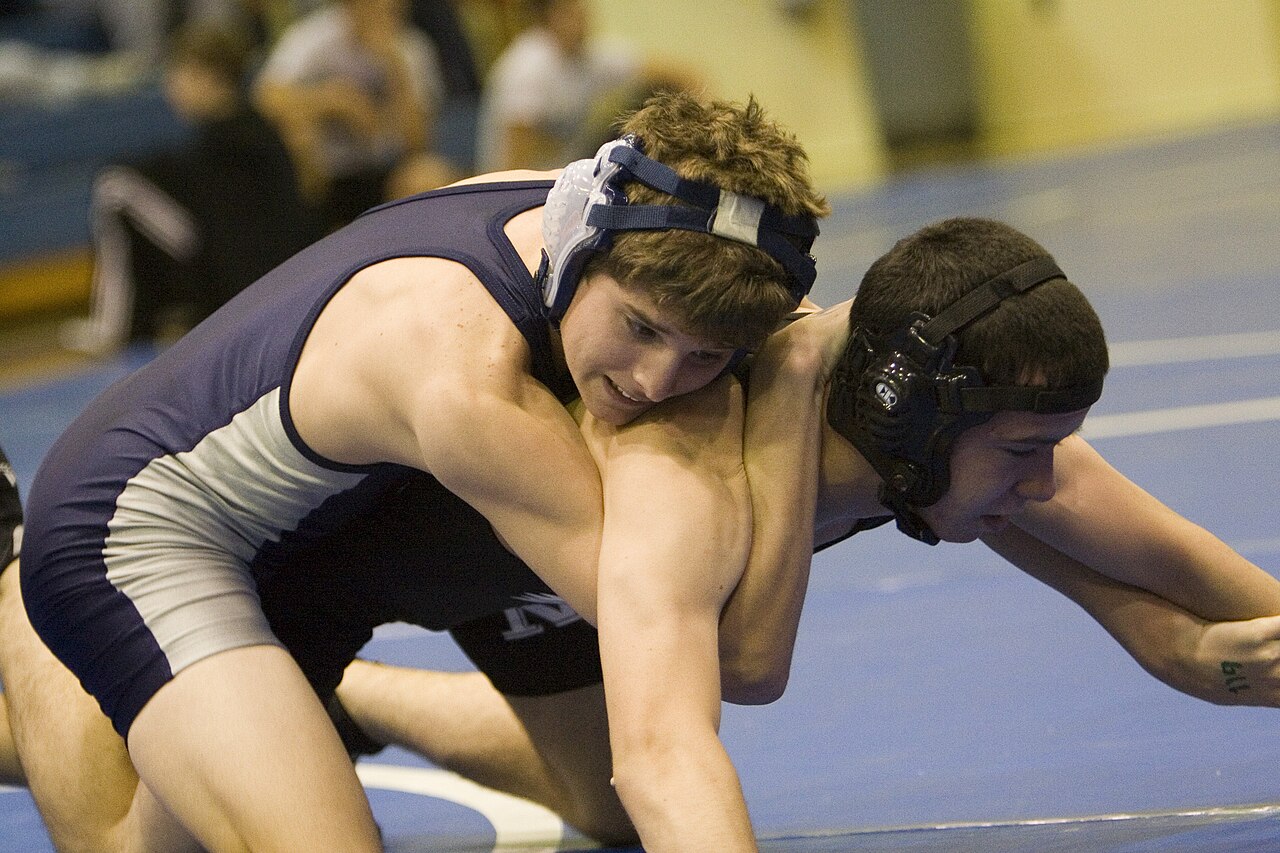
For 2026-27 the NFHS raised the minimum body fat for female wrestlers from 12% to 19% (below that requires a medical release); added bleeding to the two-minute recovery time when an opponent's illegal hold, unnecessary roughness, unsportsmanlike conduct or neutral-position false start caused it; required a call (one of four) whenever neutral wrestling stops out of bounds; required referees to signal and say a five-second count on a heel-to-buttocks hold; allowed weigh-ins by team; spelled out what a tooth and mouth protector for braces must cover; and said byes don't count as matches toward the six-per-day or ten-per-two-day limits or a wrestler's record. If your Long Island event runs on NFHS rules, these apply now.
Who these changes reach on Long Island
New York State high school wrestling runs on the NFHS rule book with NYSPHSAA's own modifications and weight-management program layered on top. On Long Island that means Section VIII in Nassau and Section XI in Suffolk for school seasons. Those programs get the new rules automatically and hear about them through their officials' associations.
The wider group is everyone who borrows the book: youth and middle school clubs, PAL programs, preseason and holiday tournaments hosted in high school gyms, and the scramble-format events that have become popular over the last few seasons. Many of those events say “NFHS rules” on the flyer and then run their brackets in software. Two of this year's changes, byes and weigh-ins, are aimed squarely at that kind of event. If you direct one, it's worth reading the bye language closely.
The 2026-27 changes, rule by rule
The NFHS Wrestling Rules Committee recommended the changes at its March 29-31 meeting in Indianapolis, and they were reviewed by the NFHS Rules Review Committee and approved by the NFHS Board of Directors. Grouped the way the NFHS lists them, here they are in the order a meet director will run into them.
| Rule | What changed | Who it lands on |
|---|---|---|
| 1-5-1, 1-5-2 | Minimum body fat for females raised from 12% to 19%; a wrestler assessed below it needs a medical release from an appropriate health-care professional. Males stay at 7%. | Coaches, athletic trainers, the state weight-management program |
| 4-2-6 | A wrestler with braces or an orthodontic device must wear an intraoral tooth and mouth protector that covers the biting surfaces, the front of the teeth and all areas of the device, upper and lower if both have hardware. | Wrestlers, coaches, referees at the skin and equipment check |
| 4-5-1 | Weigh-ins may be done shoulder to shoulder or by team at the start of a dual meet or the team's first competition each day of a multiple-dual event. | Hosts and tournament directors |
| 5-24-4b | Holding the heel to the buttocks of a broken-down opponent for more than five seconds is stalling, and the referee must signal and vocalize a five-second count. | Referees, coaches, fans |
| 5-28-3, 8-2-7 | Recovery time (two minutes) now covers bleeding, not only injury, when it results from the opponent's illegal hold, unnecessary roughness, unsportsmanlike conduct or a neutral-position false start. | Referees, the table crew keeping time |
| 7-6-3 | When neutral wrestling stops out of bounds, the referee makes one of four calls: stalling for leaving the area, stalling for pushing or pulling the opponent out, stalling for backing out, or wrestling action was taking place. | Referees, coaches, fans |
| 1-4-3, 5-3, 10-3 | Byes are not matches. They don't count toward six matches per day or ten over a two-day event, or toward a wrestler's record. Bye-placement language now covers round robin pools and byes after the first round. | Tournament directors, bracket software operators |
Four new official signals go with the stalling change: stalling by pushing the opponent out, by pulling the opponent out, by backing out of the wrestling circle, and a signal that wrestling action was continuing when the wrestlers went out.
Female body fat: 12% becomes 19%
This is the change with the biggest health reach. The weight-control rule already required each state association to run a weight-management program with hydration testing (specific gravity not above 1.025) before a body fat assessment, and to set a minimum weight class from that assessment. The new number for girls is 19%, and any assessment below it needs a signed medical release to participate. The NFHS rationale cites peer-reviewed research and describes the change as a safer margin for girls trying to reach a lower weight class. In New York the assessment process runs through the state's own weight-management program, so the practical work belongs to coaches and athletic trainers, not to referees or meet hosts. For tournament directors, the only change is that some girls' certified minimum weights may be higher than last season, which can move them up a bracket.
Blood time and recovery time
Before this season, a wrestler hurt by an illegal hold, unnecessary roughness, unsportsmanlike conduct or a false start by the opponent got two minutes of recovery time, and if they couldn't continue, they won by default. A wrestler who was bleeding from the same kind of foul had to work through the normal cumulative five minutes of blood time first. The committee's view was that a bleeding wrestler shouldn't have to bleed for five minutes before being declared the winner. Now bleeding caused by those situations gets the same two minutes of recovery time, and the NFHS interpretations say it is not deducted from the wrestler's cumulative blood time.
That matters most to whoever is running the clock. The table needs to know which clock is running: blood time, injury time, or recovery time. Tell your timer at the pregame that the referee will say which one, and have them write it down.
Stalling at the edge: four calls instead of a shrug
Edge stalling has always been a source of argument in gyms, mostly because fans and coaches couldn't tell whether the referee saw anything when wrestlers went out of bounds. Rule 7-6-3 now says that when wrestling stops for going out of bounds in the neutral position, one of four calls should be made, each with its own signal. The NFHS describes it as an education-based change: by announcing the call, the referee tells wrestlers, coaches and the crowd what happened on the edge, even when the answer is “wrestling action, no stall.” Expect referees to be more visible about this from the first dual meet.
The five-second heel count
Holding a broken-down opponent's heel to their buttocks for more than five seconds was already a stalling situation. The change requires the referee to signal and vocalize a five-second count so everyone can see it coming. It's a small change, but it's one of the ones parents will notice and ask about.
Short a referee for a dual or a Saturday tournament?
Send the date, gym, number of mats, format (dual, bracket or scramble) and your rules sheet. We cover Nassau and Suffolk, including same-day fills when an official drops out.
Request wrestling officials →Weigh-ins, mouthguards and byes: the paperwork changes
Weigh-ins by team
Rule 4-5-1 now allows wrestlers to weigh in shoulder to shoulder or by team at the start of a dual meet, or at a team's first competition each day of a multiple-dual event. The rationale is consistency between individual and team formats and speed, especially for hosts entering weights live into a weight-management system. If you host a multi-dual, decide in advance which method you'll use, put it in the event packet, and tell the referee assigned to the scale.
Tooth and mouth protectors for braces
Wrestlers with braces were already required to wear a protector. Rule 4-2-6 now describes what counts: an intraoral protector with an occlusal portion (covering and separating the biting surfaces) and a labial portion (protecting the teeth and supporting structures), covering the teeth and all areas of the braces or device, top and bottom if both have hardware. It recommends a properly fitted protector made from a model of the wrestler's teeth or formed to them, with no attachments that don't serve a protective purpose and nothing that creates a choking risk. A note lets state associations make protectors required equipment more broadly. Coaches should check equipment before the referee does.
Byes don't count
The bye language was rewritten for the way events actually run now. With bracket software and scramble events that put wrestlers in round robin pools before placement brackets, byes happen after the first round and on consolation sides. The new rules say byes are not matches and don't count toward the limits of six matches per day or ten matches over a two-day event, or toward a wrestler's record. They also say no quarter bracket, half bracket or round robin pool may have more than one bye beyond its paired bracket or pool, and that after seeds and byes are placed, the remaining wrestlers are placed by draw.
For a Long Island director running a December scramble, that means two things. Your software's match counts should exclude byes when you check a wrestler against the daily limit. And when you build pools, keep the byes balanced, because the rule now speaks to pools directly.
A pregame checklist for meet directors
- Put the rule set in writing. “NFHS 2026-27 with NYSPHSAA modifications” or your own variations, on one page, at the table and in the referee's hand.
- Brief the timer on three clocks. Injury, blood and recovery time are separate. The referee will say which one is running.
- Decide the weigh-in method. Shoulder to shoulder or by team, and who stands at the scale.
- Check the bracket settings. Byes excluded from match counts, pools balanced, draw procedure written down.
- Equipment check before the skin check. Coaches confirm mouth protectors for any wrestler with braces.
- Tell the crowd. A line in the program or a quick announcement about the new out-of-bounds calls heads off a lot of shouting from the bleachers.
For staffing questions, such as how many mats one referee can handle, how to plan table crews, and what a mat-by-mat plan looks like, see our guide to wrestling referees on Long Island. If you also need people at the table, our scorekeepers and timekeepers page covers what we can supply. Planning a holiday event? The Christmas break tournament page has booking timelines.
Questions organizers ask
Eighteen rule changes, grouped into seven items, plus four new signals: female minimum body fat raised from 12% to 19% (1-5-1, 1-5-2); a detailed description of tooth and mouth protectors for wrestlers with braces (4-2-6); weigh-ins allowed by team (4-5-1); a signaled and vocalized five-second count on heel-to-buttocks holds (5-24-4b); two minutes of recovery time for bleeding caused by an opponent's foul (5-28-3, 8-2-7); four required calls when neutral wrestling stops out of bounds (7-6-3); and byes no longer counting as matches (1-4-3, 5-3, 10-3).
Only with a medical release. Under the 2026-27 rule, any assessment below 19% for females (7% for males) requires a release signed by an appropriate health-care professional. In New York the assessment runs through the state's weight-management program, so coaches and athletic trainers handle it, not meet hosts.
No. The NFHS 2026-27 interpretations say a wrestler bleeding because of an illegal hold, unnecessary roughness, unsportsmanlike conduct or a neutral-position false start gets two minutes of recovery time, and none of it is deducted from their cumulative five minutes of blood time.
No. Starting in 2026-27, byes are not counted as matches toward the maximum of six matches per day or ten over a two-day event, and they don't count toward a wrestler's match record.
Yes. Rule 4-5-1 now allows weigh-ins shoulder to shoulder or by team at the start of a dual meet or at a team's first competition each day of a multiple-dual event. Decide which method you'll use and put it in your event packet.
Only if their rules adopt the NFHS book. Many Long Island club and youth events advertise ‘NFHS rules,’ and if yours does, the new rules apply unless you list exceptions. Send your rules sheet with your officiating request so the referee works the version you've adopted.
Sources: NFHS, “Adjustment in Minimum Body Fat Percentage for Females Highlights High School Wrestling Rules Changes”; NFHS, Wrestling Rules (2026-27 changes); NFHS, Wrestling Rules Interpretations 2026-27; LHSAA, 2026-27 NFHS Wrestling Rules Changes, full text and rationale (PDF). Checked November 19, 2026. The current NFHS rule book, NYSPHSAA modifications and your event's adopted rules control; this article is general information for organizers.
Get your wrestling season covered
Duals, holiday tournaments, scrambles and youth events across Nassau and Suffolk. Tell us the mats, the format and the date, and we’ll tell you plainly what we can staff.
Request officials for your event →