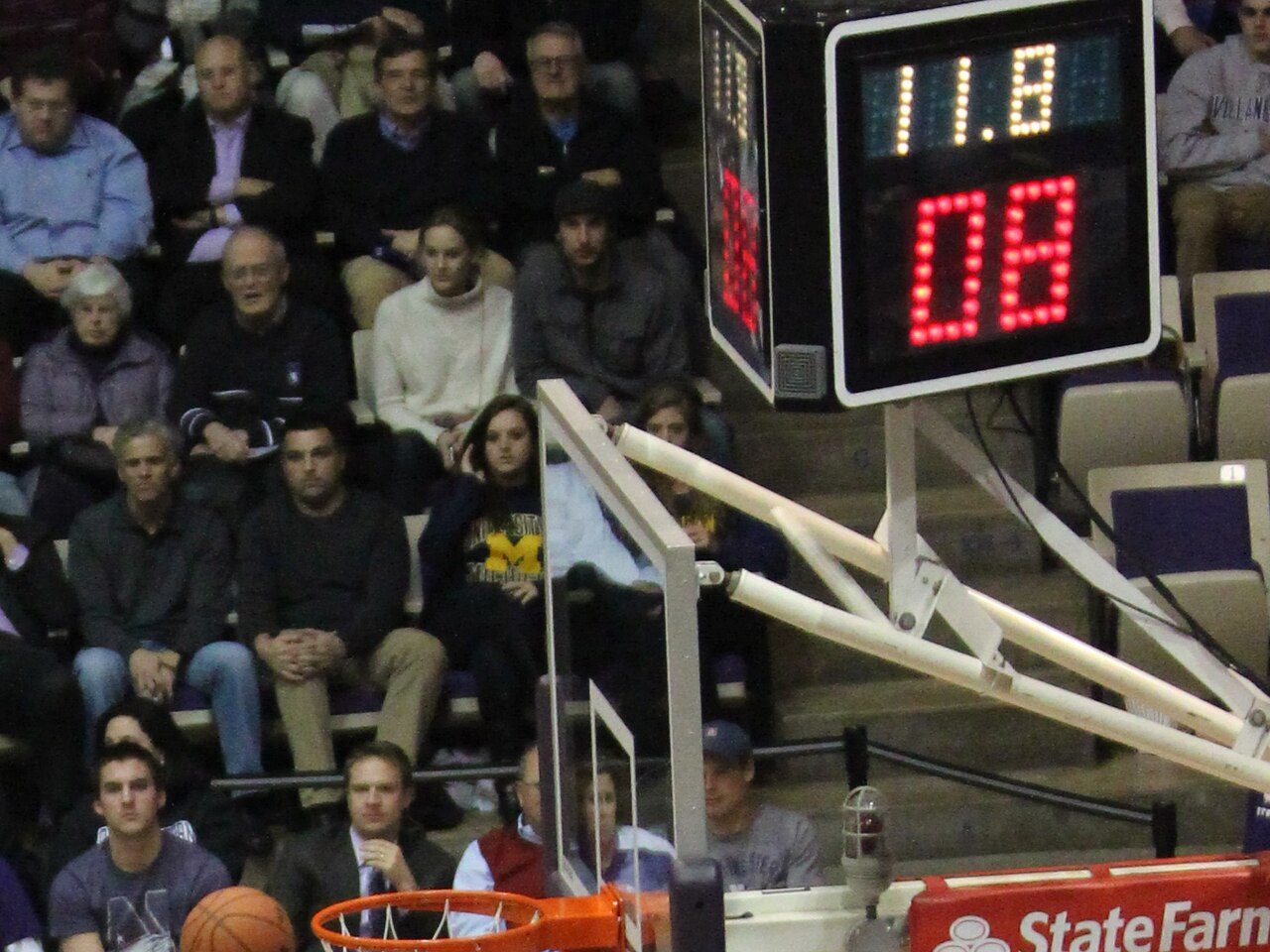
For 2026-27 the NFHS made five basketball rule changes: at least .3 seconds must run off the clock on a throw-in or missed free throw in the last 59.9 seconds of any period (only where the clock shows tenths); officials may use a visible or silent count to fix clock errors; an outdated faking-a-foul provision (6-4-4g) was deleted; technical fouls on both teams in the same dead-ball period are treated as simultaneous; and throw-in violations are administered from the original throw-in spot. New York keeps its own modifications, including a 35-second shot clock for varsity and JV and four 60-second plus two 30-second timeouts. If your Long Island league plays “NFHS rules,” these apply to you too unless your bylaws say otherwise.
Who these changes actually affect
The National Federation of State High School Associations writes the rule book that New York State high school basketball plays under, with state modifications layered on by NYSPHSAA. On Long Island that means Section VIII in Nassau and Section XI in Suffolk. That part is straightforward.
The less obvious part is everyone else. A lot of youth and adult leagues on the Island write “NFHS rules” or “high school rules” into their bylaws and then add a short list of exceptions: running clock, shorter quarters, no press until a certain point. If your league does that, the new rules arrive automatically on opening day unless you carve them out. Town rec programs, parish leagues, PAL programs, travel teams playing in-house tournaments and men’s leagues all fall into this group at least some of the time.
So the practical question for an organizer isn’t “are we high school?” It is “what does our rules sheet say, and does our gym and table crew support it?” Most of this season’s changes are about the clock, which makes the second half of that question more important than usual.
The five NFHS rule changes for 2026-27, in plain English
The NFHS Basketball Rules Committee recommended these at its April 2026 meeting in Indianapolis, and the NFHS Board of Directors approved them. The rule numbers are below so you can find them in the book or point an official to them.
| Rule | What changed | What it means at your table |
|---|---|---|
| 5-9-5 (new) | In the last 59.9 seconds of a quarter or overtime, when play resumes with a throw-in or a missed free throw, at least .3 seconds must come off the clock once the ball is legally touched inbounds. | A player can’t catch and shoot with .2 left. Doesn’t apply if your clock can’t display tenths. |
| 5-10-2 Note (new) | If the clock malfunctioned, wasn’t started or stopped properly, or didn’t run, the referee may use an official’s visible or silent count, or other official information, to correct it. | Officials can fix late starts and stops with their own count. A steady timer still prevents most of these stoppages. |
| 6-4-4g (deleted) | Removed an alternating-possession provision tied to faking being fouled after a released try. | Housekeeping. It became obsolete after last season’s change to how faking a foul is handled. |
| 8-6-4 (new) | When both teams get technical fouls in the same dead-ball period, all of them are treated as committed at about the same time for offsetting penalties. | Equal numbers cancel and play resumes at the point of interruption. Unequal numbers: play resumes as if the last single technical was the only one. |
| 9-2 Penalty | A throw-in violation is administered from the original throw-in spot. If that wasn’t one of the designated spots, the ensuing throw-in moves to one. | Fewer arguments about where the ball goes after a five-second or stepping-over violation. |
The .3-second rule and your gym’s clock
This is the change most likely to come up in a close game, and it has a built-in exception that matters on Long Island. The NFHS rule text says it does not apply when the game clock is not capable of displaying tenths of a second. High school gyms with modern scoreboards usually show tenths in the final minute. Plenty of church halls, older elementary gyms and rented rec spaces don’t.
NFHS explains the reasoning as consistency with the existing tap rule (5-2-5), which already limits what a player can do with very little time left. In practice it means the timer has to start the clock on the legal touch, every time, in the last minute of each quarter. If your timer is a parent volunteer who also keeps the book, that last minute is exactly where things go wrong.
Before the season, find out two things about every gym on your schedule: does the clock show tenths under a minute, and who runs it? Put both on your booking request so the crew knows at the pregame instead of finding out with 1.4 seconds left in a tied game.
Silent counts and clock mistakes
Officials have always given visible counts for the backcourt, closely guarded situations and the lane. The new note to 5-10-2 lets them keep a silent count as well and use it as definite knowledge to correct a timing mistake under 5-10-1. If the clock didn’t start on a throw-in, the referee can now put back the time their count says should have run.
That is good news for leagues with inexperienced tables, but it isn’t a substitute for a trained timer. Every correction is a stoppage, a conversation at the table and two coaches who think they were wronged. Our scorekeepers and timekeepers guide covers when it is worth paying someone to run the clock, especially for playoffs and showcase games.
Technical fouls on both benches
Rule 8-6-4 settles a situation that used to depend on the order things happened. When both teams are assessed technical fouls during the same dead-ball period, before the ball becomes live, every technical is treated as committed at roughly the same time. All the fouls are charged and recorded. If the counts are equal, the penalties cancel and play resumes at the point of interruption. If they aren’t equal, play resumes as if the last single technical was the only one committed.
For organizers, the takeaway is about the scorebook, not the free throws. Every one of those technicals still counts toward a coach’s or player’s total and toward team fouls where applicable. Make sure the person keeping the book records all of them, even when the penalties cancel.
Need officials who know this season’s rules?
Send the date, gym, age group, game length and the rule set you play under. We cover regular-season games, holiday tournaments and same-day dropouts across Nassau and Suffolk.
Request basketball officials →Smaller wording changes worth knowing
Alongside the five rule changes, officials’ associations have been training on several editorial revisions to the 2026-27 book. Two are worth passing on to coaches. First, the rule on electronic devices now spells out that communication between a coach and a player through an electronic device is prohibited, while hearing aids are legal. Second, a player hanging on the ring after a dunk is not considered an airborne shooter, so contact with that player is judged as ordinary contact rather than under the airborne-shooter protections. Neither changes how a typical rec game is run, but both are the kind of thing a coach will ask about after seeing it on TV.
New York’s own modifications for 2026-27
New York doesn’t play the NFHS book exactly as written. The 2026-27 NYS modifications summary that circulates to basketball officials lists several state-specific rules. These govern NYSPHSAA games; rec and youth leagues only use them if they choose to.
- Shot clock. A 35-second shot clock is used for varsity and junior varsity. It resets to 35 on a foul, when a live ball lodges between the backboard and ring or rests on the flange, or when a try or tap hits the ring. When a defender intentionally kicks or fists the ball, or an intentionally-leaving-the-court violation is called, it resets to 20 only if it showed 19 or less; with 20 or more showing, it isn’t reset.
- No shot clock? Rules for that too. If one shot clock fails, the game uses the other. If both fail, a timing device at the table is used. If there is no device, the coaches are asked whether they will play without a shot clock, and if either refuses, the game isn’t played. The shot clock operator must sit at the scorer’s and timer’s table.
- Backcourt count. Officials still show a ten-second backcourt count, even with a shot clock running.
- Timeouts. Four 60-second timeouts and two 30-second timeouts, with only one 30-second timeout usable in each half. This differs from the NFHS rule.
- Coaching box. Coaches stay within a box in front of their bench, from the end line toward the division line to a 28-foot line, and not in front of the scorer’s table.
- Uniforms. At the varsity level the home team wears white and the visitors wear dark jerseys. Sleeves, headbands and similar items must be one solid allowable color.
- Pregame. A member of each team’s coaching staff must attend the on-floor pregame, and officials read the sportsmanship card word for word to captains and head coaches at every level.
🏀 Running a holiday tournament with a mix of school and club teams? Decide in advance whether you are using a shot clock, how long it is, and who operates it. A shot clock with nobody trained to run it causes more stoppages than playing without one.
What to put on your rules sheet this winter
Most arguments in rec and club basketball aren’t about judgment calls. They come from rules nobody wrote down. A one-page sheet at the table, sent to coaches before the season, solves most of them. For 2026-27, make sure yours answers these:
- Which rule book. “NFHS 2026-27 with the following exceptions” is clear. “High school rules” is not, because coaches will disagree about whether that includes New York’s modifications.
- Clock. Quarter or half length, when the clock stops, and whether it runs during free throws or under a margin. Note whether your gyms display tenths.
- Shot clock. Yes or no, how many seconds, and who runs it.
- Timeouts. How many, how long, and whether unused ones carry over.
- Fouls. Disqualification count, bonus rules, and what happens after a technical or an ejection, including any league suspension.
- Overtime and ties. Length of overtime and whether regular-season games can end tied.
- Who’s at the table. Name the home team’s responsibility for the scorebook and clock, and what happens when nobody shows up to do it.
Then send that sheet with your booking. Officials work the rules a league adopts, and a crew that has read your sheet before tip-off spends the pregame on the court instead of negotiating with coaches.
Booking officials for the 2026-27 season
Winter is the busiest stretch of the year for basketball officials on Long Island: school games on weeknights, CYO and rec on weekends, and holiday tournaments squeezed in over the break. Crews fill fast, and a two-person crew that drops to one changes how a game can be called. Our guide to how many referees a basketball game needs explains when two officials are enough and when three are worth it.
When you request officials, the information that helps most is the same information on your rules sheet: level and age group, game length, whether there’s a shot clock, and who runs the table. For parish and youth programs, our CYO basketball referee guide covers what coordinators usually need, and our basketball referees on Long Island page explains how booking works.
Get your winter schedule covered
Send your full schedule or a single game. We’ll tell you plainly which dates we can staff, and we take same-day requests when an official drops out.
Request officials for your league →Frequently asked questions
There are five. Rule 5-9-5 requires at least three-tenths of a second to come off the clock on a throw-in or missed free throw in the last 59.9 seconds of a period. A new note to 5-10-2 lets officials use a visible or silent count to correct a clock error. Rule 6-4-4g, an outdated faking-a-foul provision, was deleted. Rule 8-6-4 treats all technical fouls by both teams in the same dead-ball period as simultaneous. And the 9-2 penalty now says a throw-in violation is administered from the original throw-in spot.
No. The NFHS rule text says it does not apply when the game clock cannot display tenths of a second. Many rec and church gyms have older scoreboards that only show whole seconds, so tell the officials at the pregame what your clock shows.
Only if their rules say so. NFHS rules govern New York State high school games, and many youth and adult leagues write 'NFHS rules' into their bylaws. If yours does, the new rules apply unless you list an exception. If you play under your own modified rules, check whether they reference the current NFHS book.
The 2026-27 New York State modifications summary circulated to officials lists a 35-second shot clock for varsity and junior varsity games, with a 20-second reset in certain situations and a requirement that the shot clock operator sit at the scorer's and timer's table.
New York modifies the NFHS rule. The NYS summary for 2026-27 lists four 60-second timeouts and two 30-second timeouts per team, with only one 30-second timeout usable in each half. Rec leagues often set their own number, so put it in your rules sheet.
Yes. Send us your rules sheet or bylaws when you book, including game length, timeouts, mercy rules and whether you use a shot clock. Officials work the rules your league adopts, and a written sheet at the table settles questions before tip-off.
Sources: NFHS, “Clock Adjustments Addressed to Support Officials in 2026-27 High School Basketball Rules Changes”; NFHS, Basketball Rules (2026-27 changes and rationale); Texas Association of Sports Officials, 2026-2027 NFHS Basketball Rule Changes; TCBOA, 2026-27 NFHS rule changes and editorial revisions (PDF); 2026-2027 NFHS NYSPHSAA Rules Modifications (NYS only), officials’ summary (PDF). Checked November 18, 2026. Your league’s adopted rules and the current NFHS rule book control; this article is general information for organizers.