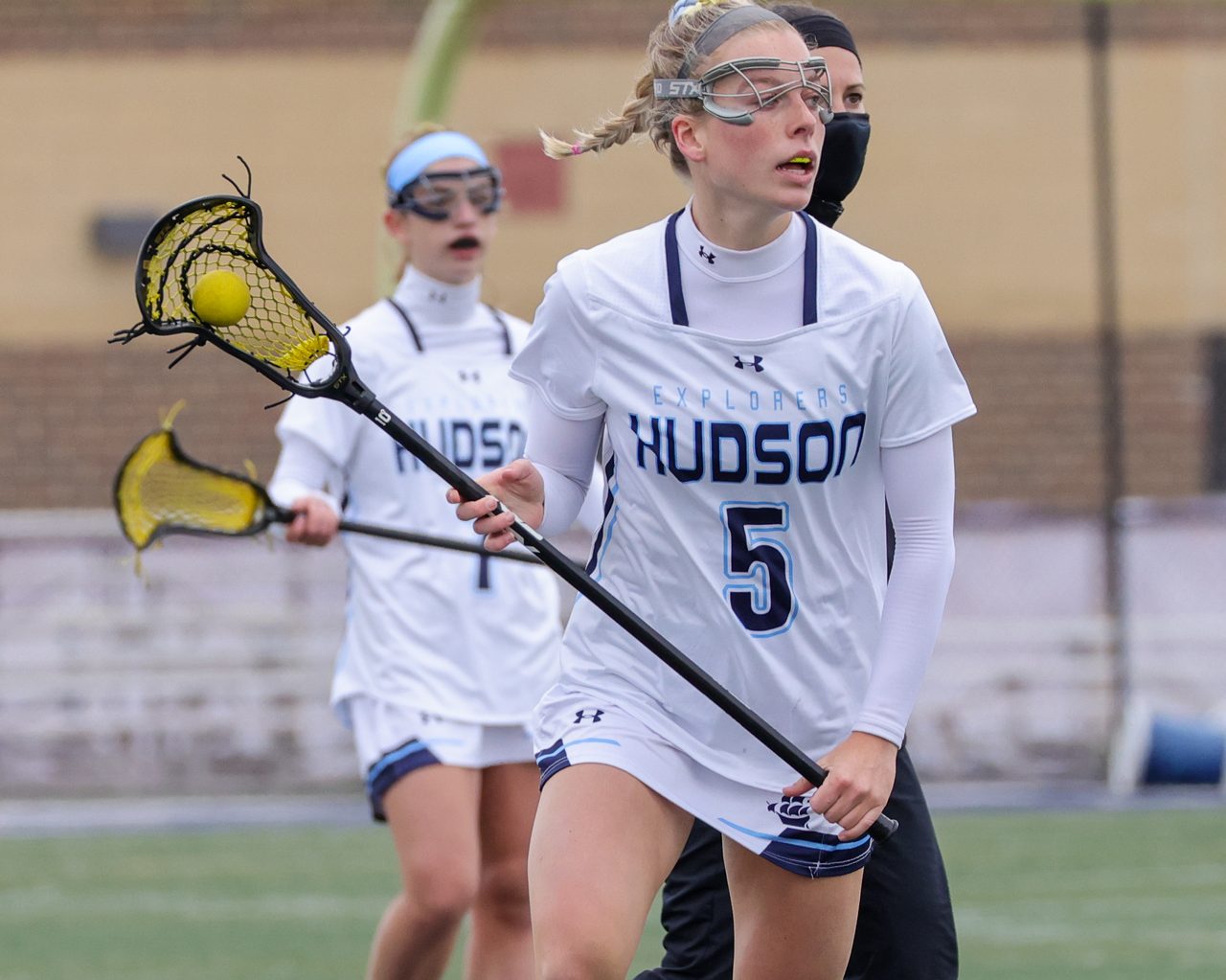
Girls lacrosse needs officials trained on the girls rule set: NFHS rules for high school, and USA Lacrosse's girls youth rules for 14U and younger. On Long Island, school games are covered by the Nassau County Women's Lacrosse Officials Association (NCWLOA) and the Suffolk Women's Lacrosse Officials Association (SWLOA). Club, town and tournament games often have to find their own officials. Book early for spring, confirm the crew size your league requires, and have a backup lined up before game day. If an official cancels, send us the details and we'll call back to confirm coverage.
Why girls lacrosse needs its own officials
The two games share a ball, a goal and a field, and that's roughly where it ends. Boys field lacrosse allows body checking within limits and uses face-offs and a crease. Girls lacrosse limits contact, starts play with a draw, and is officiated around the 8-meter arc, the free position and shooting space. A boys official who has never worked a girls game will be guessing on the calls that matter most to safety and to the score.
The rule books are separate too. USA Lacrosse writes a stand-alone youth rule book for girls 14U and below. High school girls lacrosse is played under NFHS rules, which USA Lacrosse and the NFHS develop together. USA Lacrosse's own officials page lists field lacrosse for girls and for boys, box, sixes and wheelchair lacrosse as having separate rulebooks. When you book, the first thing to say is "girls," and the second is the level.
| Area | Girls lacrosse | Boys field lacrosse |
|---|---|---|
| Rules (high school) | NFHS girls lacrosse rules | NFHS boys lacrosse rules |
| Rules (youth) | USA Lacrosse girls youth rules (14U and below) | USA Lacrosse boys youth rules |
| Restart after goals and periods | Draw | Face-off |
| Contact | Limited; youth levels restrict stick checks by age | Body checking allowed within age limits |
| Field player headwear | Eyewear required (ASTM F3077); soft headgear optional (ASTM F3137) | Helmet with face mask required |
| Key areas officials manage | 8-meter arc, 12-meter fan, free positions, shooting space | Crease, wings, penalty box |
For a fuller side-by-side and booking details for both games, see our main lacrosse referee guide for Long Island.
Who officiates girls lacrosse on Long Island
School games: the county women's associations
In Nassau, the Nassau County Women's Lacrosse Officials Association says it is responsible for officiating all girls lacrosse games in Nassau County and describes itself as about 100 officials certified at various levels. In Suffolk, the Suffolk Women's Lacrosse Officials Association runs its own roster and recruits through a New Candidate Class. If you are a school athletic director, those associations are your normal channel, and anything you need for a varsity or JV game goes through them first.
Everything else: club, town rec, camps and tournaments
The harder spots are the games that don't live on a school calendar. A town program's 10U Saturday games, a club team's summer scrimmage, a fall-ball league, a one-day tournament at a turf complex: each of these needs girls-trained officials, and they all compete for the same people on the same weekends. Many programs use an assignor, a volunteer coordinator, or a referee service like ours to fill them. Whoever fills it, the official still has to know the girls rules for that age group.
Before you call anyone, write down: date, start time, field address, age group (8U, 10U, 12U, 14U, high school), whether it's a game or a scrimmage, which rule set you play (USA Lacrosse youth, NFHS, or a league modification), and how many officials your league requires. That one note saves a lot of back-and-forth.
How many officials should you book?
There is no single answer for every girls game. Crew size is set by the league, the section or the tournament, and it usually grows with the level of play. As a starting point:
- 8U and 10U: small-sided games on shorter fields. Many town leagues use one official, and some play these as instructional games with a coach-run whistle. Check your league rules.
- 12U and 14U: these move toward full-field, goalie-in-net play, and two officials is common. One official on a full field will miss a lot of off-ball play.
- High school: crews come through the county associations, and two- and three-official crews are both used depending on the level and the game.
- Tournaments: the event sets the crew size. Plan the count per field per time slot, not per day.
Our guide on how many referees a game needs covers crew sizes across sports, including what happens when you try to run a full-field game with one official.
What a girls lacrosse official checks before the first draw
A good official arrives early and runs a short checklist. If coaches know this list, games start on time.
- Eyewear. Under NFHS girls rules, field players must wear eye protection that meets ASTM F3077, with the SEI mark. Missing or non-certified goggles mean the player sits until she has compliant ones.
- Headgear. Soft headgear is optional for field players. If a player wears it, it has to meet ASTM F3137. Face masks are not allowed on field players.
- Sticks. Officials check pocket depth and stringing. NFHS's 2027 girls rule changes add more detail on pocket construction and say sticks must be commercially available and listed by USA Lacrosse, so expect stick checks to stay a pregame focus.
- Goalkeeper gear. The goalie has her own equipment list, including a helmet with face mask and throat protection.
- Mouthguards and uniforms. NFHS rules require a mouthpiece in a visible color (not clear or white) and numbers on the front and back of every jersey. Sorting these out in warmups keeps the start on schedule.
- Field markings. Girls fields need the goal circle, 8-meter arc and 12-meter fan. A multi-use turf field lined for boys or soccer may not have them, and younger divisions may use a different layout. Tell the official ahead of time if your field is not lined for girls.
Short an official for a girls lacrosse game?
Send the date, field, age group and crew size. We'll call back to confirm coverage and quote it.
Request a girls lacrosse official →Youth rules change by age, so tell the official your division
USA Lacrosse's girls youth rules build up from small-sided play to the full high school game. Younger divisions play fewer players a side on smaller fields, often without a goalie at the youngest level, and contact is restricted. Checking rules phase in by age group, and the 2026 youth rules do not let a defender use her stick to initiate contact with an opponent's body, even at 14U. Local leagues can add their own modifications on top of the national book, covering things like running clocks, mercy rules and whether goalies play at 10U.
That is why "it's a 12U game" is not enough on its own. Send the official your league's rule sheet if it modifies the USA Lacrosse book. An official who walks in knowing your checking rules and your clock will call a cleaner game, and you'll get fewer sideline arguments.
High school rules keep moving
The NFHS publishes girls lacrosse rule changes every year. The changes released in July 2026 for the 2027 season include a possession clock that a state association can choose to adopt (a shot on goal within 90 seconds of gaining possession), clearer guidance on goals scored as time expires, a rule against players switching sticks on the field during play, and a white home jersey requirement starting January 1, 2031. State adoption matters, so school programs should follow their section's guidance on which options apply.
Why girls games run short on officials, and when
Girls lacrosse officials come from a smaller pool than soccer or basketball. Each county association trains new officials through a classroom-and-field course before the spring season. NCWLOA's 2026 clinic, for example, ran six Sunday-morning Zoom sessions from January 25 to March 1 plus two field sessions in March, and cost $250 including the first year's dues, a rule book, penalty cards, a flag and a whistle. That's a real commitment, and it limits how fast the pool can grow.
On top of that, USA Lacrosse certification is annual. Officials complete a one-time rules course for their discipline, pass a rules test every year, and recertify. Junior officials aged 14 to 18 can work youth games after completing the girls rules course, a professional-development course, the online youth rules exam and a field evaluation. Programs that use junior officials should pair them with an adult official, especially at 12U and up.
In practice, the pinch points on Long Island are:
- Spring weekdays: school games take most of the experienced officials in the afternoon, which squeezes town and club games scheduled at the same time.
- Spring and summer Saturdays: rec games, club games and tournaments all want the same morning slots.
- Fall ball and showcase events: fewer games, but also fewer active officials, and weather moves games around.
Weather is the other big one. A rainout on Saturday that gets moved to Sunday often loses its officials, because they've already been booked elsewhere. Our rainout referee policy guide covers what to agree on before the season so a reschedule doesn't leave you with no one.
What to do when your girls lacrosse official cancels
The order matters. Work through it quickly:
- Call your assignor or the person who booked the game. They may already have a replacement or know who is free.
- Check whether the game can run with a smaller crew. If your league allows a game to be played with one official in an emergency, confirm that both coaches agree, and write it down.
- Request outside coverage right away. The earlier we hear about a girls game, the better the odds, because we need someone who works the girls rules at your level.
- Tell both coaches what's happening. A delayed start is better than a cancelled game, and a cancelled game is better than one run by a parent who doesn't know the rule set.
- Record what happened. If one official keeps cancelling, that's a supply problem worth fixing before the next season.
For the general playbook across sports, read what to do when a league referee cancels last minute. For multi-field events, plan the crew by field and time slot, not by day.
Hiring checklist for girls lacrosse officials
However you book, through an association, an assignor or EmergencyRefs, ask these questions:
- Does the official work girls lacrosse, at this age level, this season?
- Is the official a current USA Lacrosse member with this year's certification? USA Lacrosse membership for officials includes a criminal background check and abuse-prevention training.
- Who supplies the game clock, the scorekeeper and the timer? Many youth games depend on a volunteer at the table.
- What happens if the game is delayed by lightning or moved because of rain?
- How is the official paid, and when? Agree on this before the game, not in the parking lot.
Planning a girls lacrosse season on Long Island
The programs that rarely lose a game to a missing official do the same few things. They lock in their game dates early and send them to whoever assigns officials as soon as fields are confirmed. They avoid scheduling town games on top of the busiest school windows when they can. They keep a list of backup officials and know which ones work girls games. And they have an emergency number ready for the day someone gets sick or stuck on the Southern State.
If you are building a schedule for spring, sixes events or a summer tournament, send us your dates and the age groups. We'll tell you plainly what we can cover and what we can't.
Need a girls lacrosse official on Long Island?
Same-day requests are welcome. Tell us the sport, date, field, age group and crew size, and we'll call back to confirm coverage and quote it.
Request a referee →Frequently asked questions
Yes. Girls lacrosse uses its own rules: NFHS girls rules in high school and USA Lacrosse's girls youth rules for 14U and below. Contact limits, the draw, the 8-meter arc and free positions are called differently from boys lacrosse, so book an official who works girls games at your level.
School games in Nassau are officiated through the Nassau County Women's Lacrosse Officials Association (NCWLOA), and Suffolk has the Suffolk Women's Lacrosse Officials Association (SWLOA). Athletic directors work through those associations. Club, town and tournament games usually arrange their own officials or use an assignor or referee service.
It depends on the level and the league. Small-sided 8U and 10U games often use one official, 12U and 14U full-field games commonly use two, and high school crews are set by the county associations. Tournaments set their own crew sizes, so plan by field and time slot.
Under NFHS girls rules, field players need eyewear meeting ASTM F3077 with the SEI mark, and a mouthpiece in a visible color. Soft headgear is optional but must meet ASTM F3137, and face masks are not allowed on field players. Goalies need a helmet with face mask, a separate throat protector, padded gloves, a chest protector and leg padding. Officials also inspect sticks.
Contact the county association. NCWLOA runs a winter clinic; its 2026 clinic was six Sunday-morning Zoom sessions plus two March field sessions, and cost $250 including first-year dues and starter gear. SWLOA runs a New Candidate Class. You'll also need USA Lacrosse membership and annual certification.
We take same-day requests and will tell you quickly whether we can cover it. Send the date, start time, field, age group, rule set and crew size through our request form, and we'll call back to confirm coverage and quote it.
Sources: Nassau County Women's Lacrosse Officials Association, home page and "Become an Official" (2026 clinic dates and cost); Suffolk Women's Lacrosse Officials Association, swloa.org; USA Lacrosse, Rules & Field Diagrams and Officials; NFHS, Girls Lacrosse Rules Changes – 2027; NFHS girls lacrosse equipment rules (Rule 2) as published by state associations. All checked November 16, 2026. Leagues and sections may modify these rules; follow your league's current rule sheet.